2026–2027 Fall Semester Academic General Assembly Meeting Held
Karabük University School of Foreign Languages held its Academic General Assembly Meeting for the Fall Semester of the 2026–2027 Academic Year. In addition to preparations for the new academic year, scientific research, academic publication performance, and academic incentive activities were among the key agenda items of the meeting.
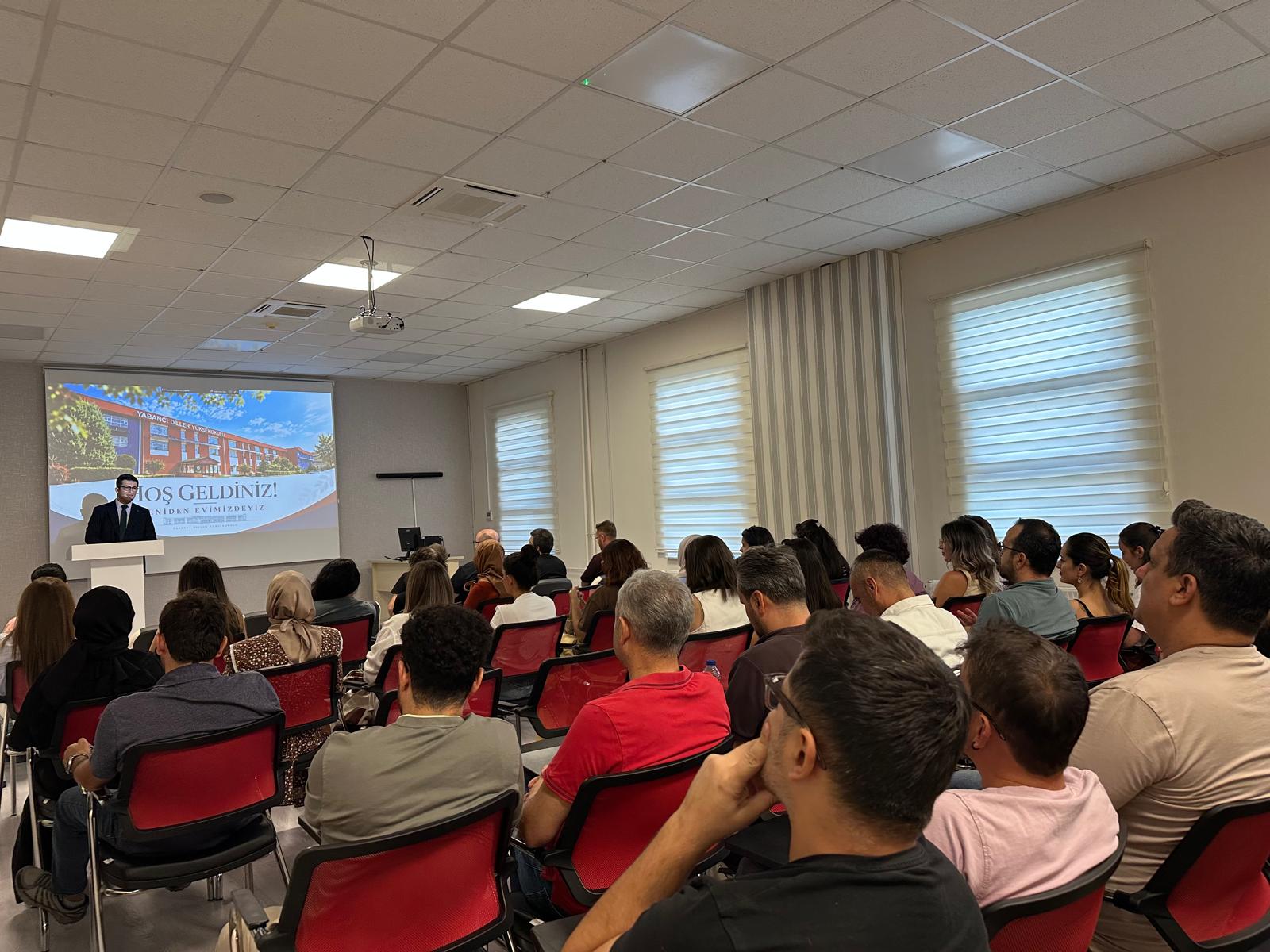
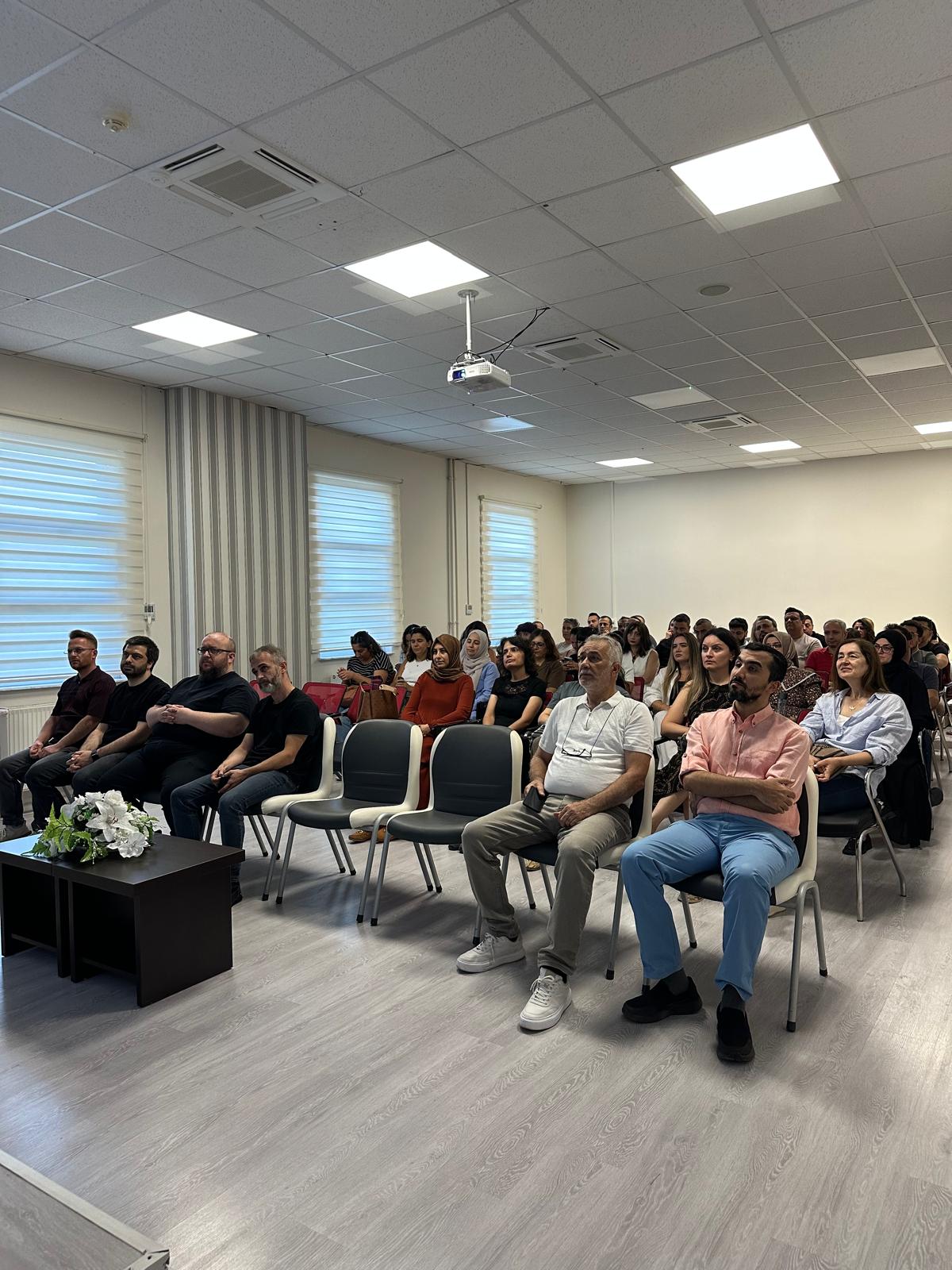
The 2026–2027 Fall Semester Academic General Assembly Meeting of Karabük University School of Foreign Languages was held on 7 September 2026 under the chairmanship of Assoc. Prof. Dr. Mustafa POLAT, Director of the School of Foreign Languages, with the participation of the academic staff.
The meeting included a comprehensive evaluation of the activities carried out during the summer period, the 2026–2027 academic calendar, the updating of academic databases, scientific research and academic incentive activities, instructional materials, curricula, assessment and evaluation processes, as well as other academic and administrative matters concerning the new academic year.
Scientific Output and Academic Incentives Among the Main Agenda Items
A substantial part of the meeting was devoted to evaluating the School of Foreign Languages’ performance in scientific research, academic publications, and academic incentives. In line with Karabük University’s goal of becoming a research university, it was emphasized that contributing to scientific production is a shared responsibility across all academic units. The School’s current performance, areas for improvement, and objectives for the forthcoming period were also shared with the academic staff.
Particular attention was drawn to the remarkable increase in the School’s academic publication performance in recent years. According to university-wide publication data for the period 2021–2025, the annual number of publications produced by the School of Foreign Languages increased from 15 in 2021 to 171 in 2025, representing an increase of 1,040 percent over four years. It was also noted that the School produced a total of 268 publications between 2021 and 2025.
Director of the School of Foreign Languages Assoc. Prof. Dr. Mustafa POLAT stated that this growth was highly significant, while emphasizing the need to make it sustainable and to translate it more strongly into academic incentive indicators and high-quality scholarly outputs.
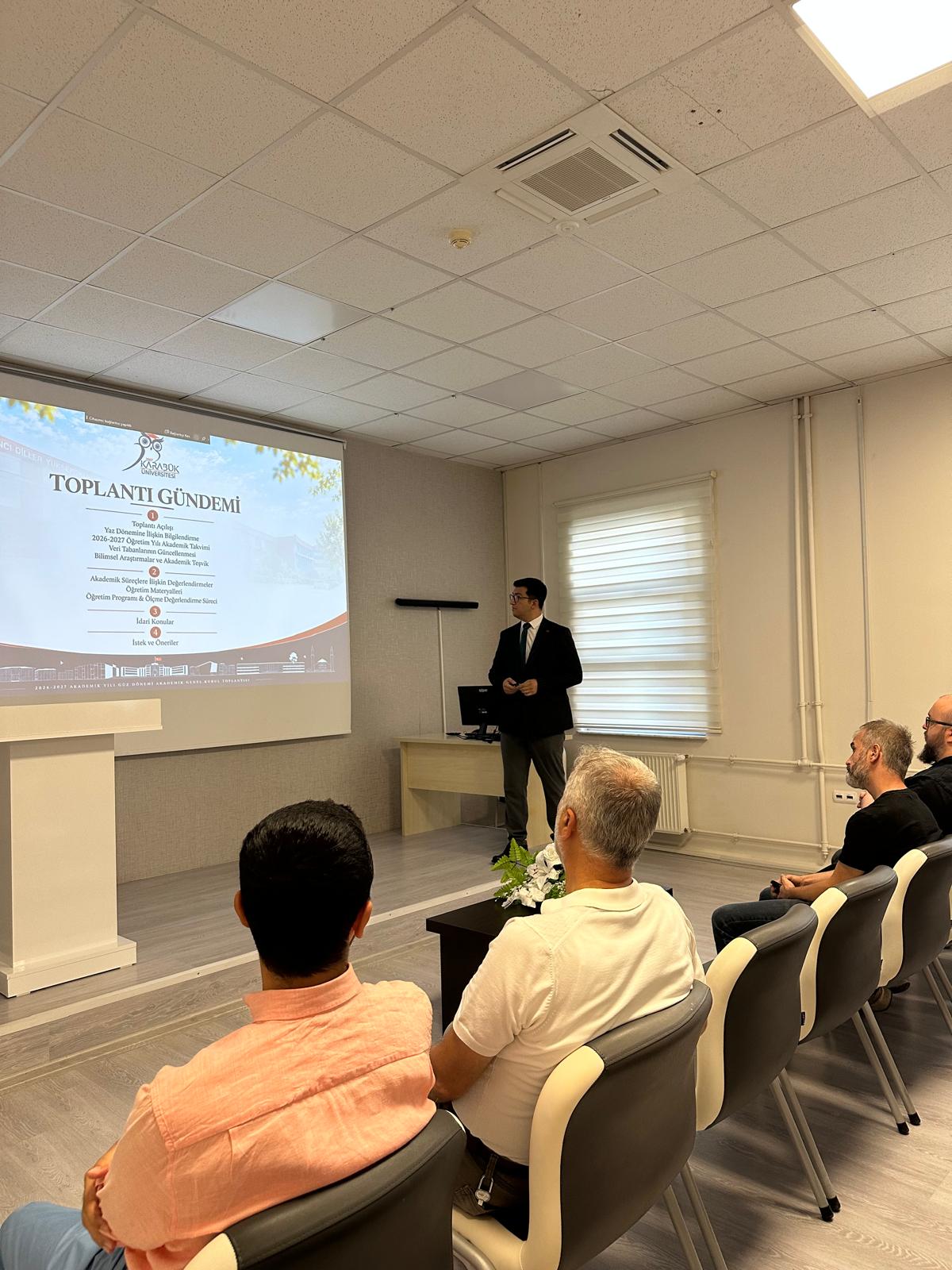
Assoc. Prof. Dr. Mustafa POLAT said:
“While we continue to carry out our teaching and learning activities with a strong sense of responsibility, we must strengthen the research dimension of our academic work to the same extent. The substantial increase in our publication numbers in recent years clearly demonstrates the potential of our academic staff in this area. Our next objective is to sustain this momentum, improve the quality and international visibility of our publications, and establish scientific production as an enduring component of our School’s academic culture.”
“The Goal of Becoming a Research University Is a Shared Responsibility for All of Us”
Highlighting Karabük University’s research-oriented growth vision, Assoc. Prof. Dr. Mustafa POLAT recalled the remarks of Karabük University Rector Prof. Dr. Fatih KIRIŞIK regarding scientific production as one of the most distinctive responsibilities of universities.
At Karabük University’s August Senate Meeting, Rector Prof. Dr. Fatih KIRIŞIK, in his assessment of scientific production, stated that the defining characteristic of universities within the sphere of public service is their responsibility to produce and serve science, emphasizing that the University must continuously strengthen its scientific standing. Rector Prof. Dr. Fatih KIRIŞIK also underlined the importance of efforts aimed at increasing the international visibility of Karabük University’s scholarly publications.
Assoc. Prof. Dr. Mustafa POLAT stated that the approach articulated by Rector Prof. Dr. Fatih KIRIŞIK also provides an important roadmap for the academic goals of the School of Foreign Languages:
“The continuous emphasis placed by our Rector, Prof. Dr. Fatih KIRIŞIK, on scientific production, high-quality publications, and a strong research culture places an important responsibility on all of us. We cannot regard our University’s goal of becoming a research university as an objective that concerns only certain faculties or specific academic disciplines. As the School of Foreign Languages, we must also contribute more strongly to this goal through the academic capacity we possess. Every article, book chapter, conference paper, or research project produced by our academics within their own areas of expertise contributes to the overall scientific strength of our University.”
The improvement in academic incentive indicators across Karabük University was also discussed during the meeting. It was noted that the number of applications submitted under the Academic Incentive Program increased from 339 in 2022 to 560 in 2025, while the total academic incentive score rose from 15,221 to 27,519 during the same period, corresponding to an increase of 80.8 percent. Rector Prof. Dr. Fatih KIRIŞIK had previously described this improvement not merely as a quantitative increase, but as an outcome of high-quality scientific production, a strong research culture, and a sustainable approach to academic performance.
Assoc. Prof. Dr. Mustafa POLAT stated that the School of Foreign Languages aims to further strengthen its contribution to this growing academic momentum across the University.
Support for Academic Staff Throughout the Publication Process
The meeting went beyond assessing existing academic performance and also introduced a guiding roadmap aimed at increasing the scholarly output of academic staff.
Assoc. Prof. Dr. Mustafa POLAT emphasized that academics who wish to conduct research and publish their work should not be left unsupported throughout the process, adding that the School administration would provide all feasible assistance in this regard. He stated that a supportive approach would be adopted to facilitate scholarly production, ranging from the development of research and publication ideas and the identification of potential collaborators to the dissemination of publication and conference opportunities and the provision of guidance regarding different types of academic outputs.
Within this framework, the meeting addressed a number of measures, including the regular dissemination of calls for books and book chapters as well as national and international conference announcements; bringing together academics working in similar fields to establish collaborative publication groups; producing high-quality academic publications from master’s and doctoral theses; converting papers presented at international conferences into full-text publications; increasing participation in international books and book chapters; and strengthening academic planning for publication in journals indexed in national and international databases.
The importance of closely following the scholarly literature relevant to academics’ research areas, becoming familiar with the work of colleagues in their fields, and appropriately citing relevant studies in accordance with the principles of academic integrity was also highlighted in relation to academic visibility. Academic staff were encouraged to progressively target stronger publication outlets, developing publication strategies ranging from national and international peer-reviewed journals to journals indexed in TR Dizin, ESCI, Scopus, and SSCI.
In his remarks on the issue, Assoc. Prof. Dr. Mustafa POLAT stated:
“We do not want simply to tell our colleagues that ‘we need to publish more.’ We also want to address together the questions of how we can achieve this, what opportunities we can make use of, and how we can support one another. We will share relevant conference and publication calls, help colleagues working in related fields become aware of one another’s work, and encourage collaborative research. Within the limits of our resources, we will provide guidance on issues such as identifying potential publications that may be developed from master’s or doctoral theses, transforming conference papers into journal articles, and positioning research for publication in more highly regarded indexes. Our aim is to move academic production beyond an individual endeavour and transform it into a shared academic culture built on mutual support.”
Assoc. Prof. Dr. Mustafa POLAT also emphasized that academic incentive activities should not be viewed solely in terms of financial incentive payments:
“For us, the academic incentive score is not an end in itself; rather, it is one of the measurable outcomes of scientific production, research projects, publications, scholarly activities, and academic visibility. Our principal objective is to build a School of Foreign Languages that produces more—and higher-quality—scholarly output each year than it did in the previous year.”
Preparations for the New Academic Year Evaluated
In addition to scholarly activities, information was provided on the work carried out by the School of Foreign Languages during the summer period. It was reported that the summer school had been completed with three classes and 168 students, while revisions made to the School of Foreign Languages Directive on Education, Teaching and Examinations and the Summer School Directive were also discussed.
The new-term division of responsibilities within the School’s Assessment and Evaluation Committee and Curriculum and Materials Committee was shared with the academic staff. Information was also provided on The OWLS July 15 Special Issue, the updated website, the student handbook, and orientation activities.
Other agenda items included the 2026–2027 academic calendar, placement and exemption examinations, instructional materials, revisions to quiz practices, assessment and evaluation procedures, the updating of academic CVs and scholarly databases, course schedules, technical infrastructure, physical facilities, and institutional cost-saving measures.
The meeting concluded following the collection of opinions and suggestions from the academic staff.